中文
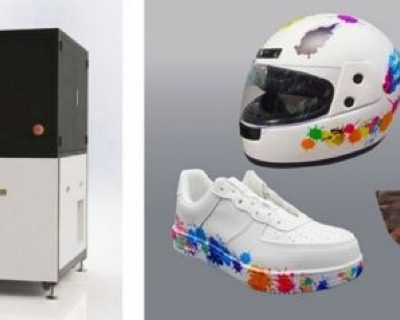
Some 300 printing people gathered at Shift, Heidelberg’s international summit, to debate the digitisation of print processes and the rise of hybrid production. Over two days the conference examined the future of the industry through artificial intelligence, software, automation and robotics, with real-world examples showing how comprehensive digitisation and data-driven integration secure the future viability of print shops. As the event ran, Heidelberg sold its first Jetfire 50 industrial digital press in the United States, to a Phoenix-based print business, a tidy illustration of the thesis being presented.
Dr David Schmedding, Chief Sales Officer at Heidelberg, said the high level of interest in Shift this year shows how strongly digitalisation and AI are shaping the industry, and that the need for information and exchange among market participants is growing continuously. The agenda centred on AI-supported production planning, autonomous workflows, data ecosystems, the Jetfire 50, robotics and the increasing integration of AI agents into business and production processes.
A particularly vivid example came from Matthias Schmid of Swiss company Schmid-Fehr AG, which has automated its processes for decades and now runs the AI-controlled Prinect Touch Free workflow alongside a Jetfire 50 industrial inkjet system and a Speedmaster XL 75. Schmid noted that the value of an average print job, around 2,800 euros in 2015, had fallen to roughly 800 euros, and that digitising processes was the only way to keep producing profitably as margins compressed. Hybrid production controlled by Prinect Touch Free, he argued, is the answer.
Heidelberg’s own tooling for that journey was laid out by Jürgen Grimm, Head of the Prinect Business Unit and AI Coordinator. The new Prinect Touch Free workflow largely automates production planning and manufacturing through defined data and target values, with AI applications ranging from a chatbot on the Heidelberg Portal that answers workflow questions to automated job bundling and selection of the most cost-effective production path in hybrid environments. Grimm said the primary focus is tangible customer benefit: reducing employee workload, making processes more predictable and lifting automation levels across the shop floor.
Robotics was a recurring theme. Andreas Reichert of start-up Lunes Robotics pointed to a looming shortage, with millions of skilled workers expected to be missing in the US and Europe over the coming years, as a force driving humanoid and collaborative robotics into industrial print. Heidelberg presented itself as a system integrator, combining software, presses, data management, automation and robotics into a connected production environment built on intelligent data management and the AI-powered Prinect Touch Free workflow.
The throughline of Shift 2026 was that automation, properly deployed, lets mid-sized print shops compete with the efficiency of online printers, but only if they commit to an automated business model, whether as a platform provider, a niche specialist or a local service provider. With order volumes rising even as run lengths shrink, Heidelberg is betting that the shops which embrace AI-driven, robot-assisted hybrid production will be the ones still standing and growing by the end of the decade.
Source: Print21 (print21.com.au)
The economics behind the enthusiasm are blunt. As Schmid-Fehr’s experience shows, average job values have fallen by more than two-thirds in a decade, a compression that no amount of incremental press speed can reverse on its own. The only durable response is to remove cost from the process itself, through automation that needs less skilled labour per job and workflows that route each order to its most efficient production path without human scheduling. Heidelberg is explicitly positioning Prinect Touch Free and the Jetfire 50 as the instruments of that response, wrapping them in a hybrid model that lets a single shop serve both long-run offset economics and short-run digital agility. The implication for the installed base is significant: presses bought on specification alone are no longer enough, and the shops that thrive will be those that commit to an automated, data-connected operating model. Shift 2026 made clear that for mid-sized printers, automation is no longer a nice-to-have but the dividing line between relevance and decline.
The competitive subtext is that Heidelberg is not alone in this pitch. Rivals such as Komori, Ricoh and screen-equipment makers are each advancing their own automation and data stories, and the shops that benefit most will be those that pick a coherent ecosystem rather than bolting incompatible point solutions together. Heidelberg’s advantage is the breadth of its portfolio, spanning offset, the Jetfire 50 digital system and a maturing software layer, which lets it present a single, integrated narrative from prepress to finished product. The humanoid-robotics thread from Lunes Robotics may still be early, but the labour math it cites, millions of missing skilled workers in the US and Europe, is exactly the pressure cooker pushing automation from optional to essential. Shift 2026’s lasting message is that hybrid, AI-assisted, robot-supported production is no longer a future scenario but the operating model for shops that intend to be standing, and profitable, by the end of the decade.