
 中文
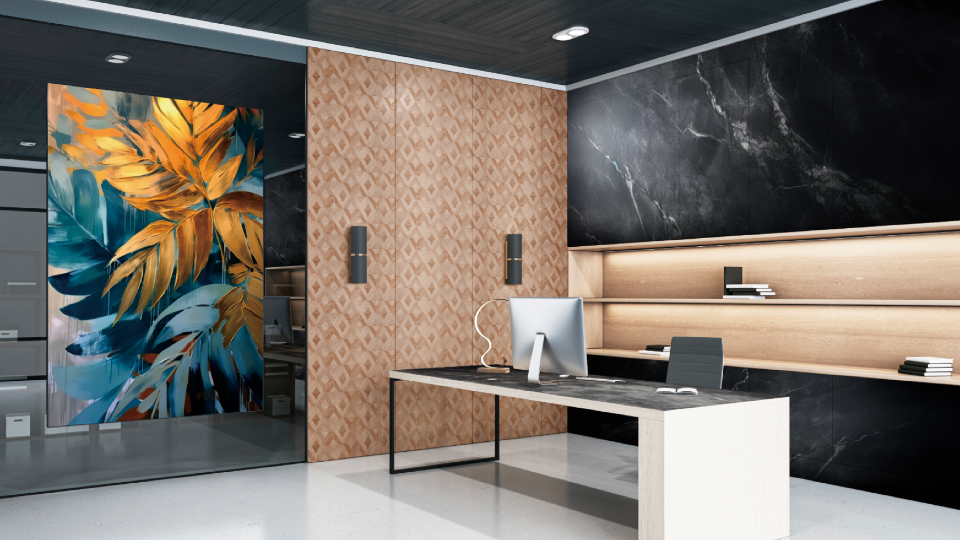
Culto da Imagem, a Portuguese print company based in Sintra, has expanded its production capabilities by installing a Mimaki JFX600-2531 UV flatbed printer, enabling it to pursue new opportunities in customised interior décor and premium visual communications. With more than a decade of experience in high-quality graphic production, the company had watched demand for distinctive wall coverings, decorative panels and specialised interior applications climb, but its existing equipment limited the complexity and volume of projects it could accept.
Working with Mimaki distributor Digidelta Portugal, Culto da Imagem selected the JFX600-2531 to increase printing speed, improve quality consistency and broaden the range of materials it could process. André Ferreira, a partner at the company, said the investment was driven by the need to handle more demanding projects while meeting increasingly tight customer deadlines. For a shop competing on design-led work, the ability to say yes to ambitious briefs is itself a competitive advantage.
The new flatbed system has allowed Culto da Imagem to widen its application portfolio while improving day-to-day performance. Faster printing and consistent output quality let the company take on larger workloads and meet the specific material and design requirements of interior architects and design studios. Substrate versatility has been particularly important, enabling production on materials that were previously difficult or impractical to process efficiently, from rigid panels to textured surfaces used in bespoke interiors.
The company reports higher production volumes and fewer equipment breakdowns, material waste and rework, all of which help control indirect manufacturing costs. These gains have strengthened relationships with existing customers, who are now commissioning more ambitious projects, while attracting new business from designers seeking reliable production partners for customised interior environments. In a segment where the finished piece is judged as much on craft as on colour, dependable technology underpins both reputation and margin.
Ferreira emphasised that dependable technology and responsive local support were as important as the machine’s specifications. A flatbed that sits idle because of a missing part or an unresolved fault quickly erodes the very speed advantage it promised. The partnership with Digidelta Portugal gave Culto da Imagem confidence that commissioning, training and after-sales service would keep the investment productive from day one.
The installation highlights the growing role of industrial UV flatbed printing in architectural decoration and personalised interior applications. As homeowners, hospitality brands and corporate clients seek spaces that feel distinctive rather than off-the-shelf, the demand for short-run, design-specific surface graphics keeps rising. UV flatbed technology, capable of laying down durable, high-resolution images directly onto rigid substrates, is well suited to that shift away from mass-produced décor.
For print service providers, the lesson is that the interior-décor market rewards versatility and reliability over raw speed alone. A shop that can move confidently between materials, hold colour across a bespoke run and deliver on a designer’s deadline becomes a preferred partner rather than a commodity supplier. Culto da Imagem’s experience shows how a single well-chosen flatbed can open a new revenue stream without forcing a complete reinvention of the business.
The broader trend is clear: personalisation, once confined to promotional products and signage, is moving into the built environment. Print companies that invest in the right flatbed platform and the applications knowledge to use it are positioning themselves at the intersection of printing and design, a space where margins are healthier and competition is thinner than in commodity graphics.
Culto da Imagem’s expansion is therefore a small but telling indicator of where decorative printing is heading: closer to the architect, closer to the material, and closer to the customer’s own sense of place.
Source: Culto da Imagem / Mimaki via inkish.news


