中文
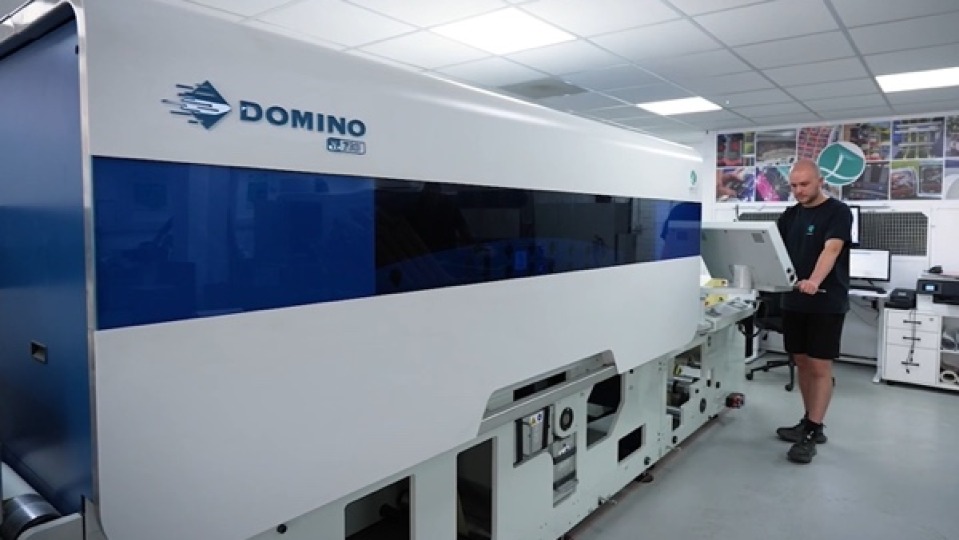
UK-based Labelnet has expanded its digital label production with the installation of a Domino N730i inkjet press, deepening a transformation that began when the company installed its first Domino N610i in 2020. After more than 25 years operating primarily as a flexographic label manufacturer, Labelnet introduced digital printing to meet growing customer demand for shorter runs, faster turnaround and greater production flexibility. Digital printing now accounts for about 40% of total output, and turnaround times have fallen from weeks to days or, in some cases, hours.
Managing Director Rob Lorkins says the initial investment fundamentally changed the business. Bringing studio and artwork preparation in-house, developing new expertise and responding more quickly to changing customer requirements all became possible once digital was on the floor. The first Domino gave Labelnet a foothold; the second confirms that digital is now core to how the company grows.
The transition also let Labelnet move beyond its established food label business into chemical and beverage applications, while building capabilities for embellished, foiled, variable-data and multilayer labels. Combining digital inkjet with conventional flexographic finishing has become a deliberate production strategy rather than a temporary fix. In 2025, the company earned the Digital Labels & Packaging Excellence with Hybrid Printing Award for a peel-and-reveal beer label produced for Hackney Church Brewery, a project that showcased how digital and finishing can combine for standout shelf impact.
Workforce development has travelled alongside the technology. Existing employees learned new skills, and younger recruits adapted quickly to digital workflows. Lorkins sees this blend of new capability and people development as central to the company’s continued evolution, suggesting the benefit is not only capacity but culture.
The newly installed Domino N730i raises the technical bar. It prints at up to 1200 dpi and runs at 90 metres per minute, increasing capacity for demanding label applications. Its Sunrise digital front end incorporates real-time inline raster image processing, so artwork and variable-data files are processed during printing rather than all upfront. That reduces press idle time and improves throughput, particularly when jobs change frequently or carry personalised content.
Craig Clawson, Sales Manager at Domino Printing Sciences, notes that Labelnet’s second Domino investment demonstrates the growth opportunities digital adoption can unlock. For Labelnet, pairing the N610i and N730i strengthens a hybrid model that uses digital flexibility alongside established flexographic processes to serve a broader range of customer requirements.
The hybrid approach is worth examining because it avoids the false choice between digital and conventional. Flexo remains efficient for long, repeat runs; digital wins on short runs, versioning and speed. Running both lets Labelnet quote confidently across a wide span of work without forcing every job onto a single, compromised workflow. That agility is increasingly what label buyers want.
Labelnet’s story also illustrates a maturing market dynamic. Where early digital label investments were often experimental, intended to test the waters, a second press signals conviction. The 40% digital share is not a sideline; it is a substantial, strategic portion of the business that continues to climb. As brands demand more personalisation and faster promotional cycles, that share is likely to keep growing.
For other converters weighing a second digital press, Labelnet offers a clear template: start with one machine, build in-house expertise and applications, prove the model, then scale. The result is a more resilient business, a more skilled workforce and a production floor that can pivot as customer needs shift.
Source: Domino / Labelnet via inkish.news