 中文
中文For most of its 100-year history, Komori’s identity has been inseparable from the sheetfed offset press. The company’s name is etched into the floorplates of print shops across Asia, Europe and the Americas, and generations of printers have measured their production capacity in the number of Komori machines on the floor. Now the Japanese manufacturer is deliberately adding a second identity. Komori has announced it is diversifying outside of print, acquiring Maruyama Chiller, a specialist manufacturer of customized chillers and temperature-control systems used in semiconductor production, in a US$250 million deal that takes the press maker into the high-growth micro-processor and chip-making supply chain.
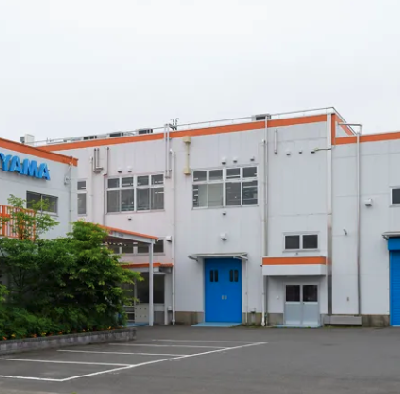
The acquisition is a strategic bet on the most important industrial trend of the decade. Semiconductor fabs run at astonishing temperatures, and the process of manufacturing chips requires precise thermal control at every stage, from wafer processing to lithography to testing. Maruyama Chiller, which designs and manufactures customized chillers for semiconductor manufacturers and equipment makers around the world, occupies exactly that niche. By acquiring it, Komori gains entry to a market defined by capacity constraints, government subsidies and structural demand growth, a very different world from the mature, cyclical printing machinery business.
Komori’s own explanation of the deal emphasizes the fit between its management capabilities and the new market’s needs. Maruyama will become a wholly owned subsidiary of Komori. According to the company, Maruyama Chiller Corporation is a company with advanced expertise, serving semiconductor manufacturers and semiconductor equipment makers around the world as its customers. Komori says that by combining its management foundation and global network, it will meet the rapidly growing demand for chillers in the semiconductor field. The logic is that Komori’s manufacturing discipline, supply chain management and global service network, honed over a century of building precision machinery, transfer directly to a business that sells precision thermal systems to the world’s most demanding customers.
The move is part of a wider pattern among the world’s surviving press manufacturers, who are redefining what it means to be a printing company. The announcement carries a telling detail: with Komori’s diversification, Koenig & Bauer is now the only one of the world’s four remaining offset press manufacturers that operates purely in the printing industry. Koenig & Bauer has diversified, but into other areas of print production, including digital presses and flexo presses, plus an expanding line-up of finishing solutions including die-cutting equipment and folder-gluers. It also has the widest range of offset presses on the market, from commercial and packaging sheetfed presses to newspaper and commercial web offset presses, and manufactures 95 percent of the world’s security and banknote presses.
Komori’s rivals have traveled further from their roots. Heidelberg, once the industry’s flagship, now also manufactures heavy iron castings and specialized large mechanical components for external industrial engineering clients, and has become a significant producer of EV charging stations. RMGT, the joint venture formed from Ryobi and Mitsubishi, now manufactures die-cast aluminum automotive components, builders’ hardware like door closers, and electronic and telecommunications equipment parts. (The well-known Ryobi power tools are not manufactured by Ryobi but sold under a brand license, a reminder of how far the brand has stretched.) Before it closed at the end of June, manroland Sheetfed was still manufacturing only offset presses, a cautionary tale about the risks of specialization in a shrinking market.
The contrast between those trajectories frames the strategic logic of Komori’s move. The offset press market is not going to disappear, and Komori’s core business remains central to its identity: press sales rose 2.5 percent in the quarter to the end of June, with strong sheetfed sales offsetting a fall in web press sales. But the geography of that growth is uneven. The company’s US business took a major hit, with sales down 40 percent on economic uncertainty, while European sales rose strongly, up 40 percent. A manufacturer that depends on print alone is exposed to those swings; a manufacturer with a semiconductor business has a second engine to smooth the ride.
For the printing industry, the deal is a milestone worth watching. It confirms that the era of the single-product press manufacturer is ending, and that the survivors will be diversified industrial groups for whom printing is an important, but not exclusive, line of business. The deal also reinforces a longer-term theme: the machinery giants of the print industry are becoming diversified industrial technology companies, and their survival increasingly depends on how successfully they navigate that transition. That has implications for printers: their equipment suppliers are becoming more financially resilient, but also less singularly focused on print innovation. The silver lining is that companies like Komori bring their manufacturing excellence and global networks to new industries, which can fund R&D that ultimately benefits their print customers. As Komori follows the semiconductor boom, the industry will be watching to see whether the diversification pays off, and what it means for the next generation of printing technology.
Source: Print21, August 19, 2026 — Komori to diversify in $250m move