
 中文
For the last few months, Canadian packaging people have been doing something they genuinely hate: waiting for a spreadsheet.
Not a quote sheet. Not a job ticket. A government list. Because since July, when the White House first ordered a 50 percent tariff under Section 338, the difference between a job that makes money and a job that quietly bleeds has often come down to which ten-digit code somebody in Washington typed into a document.
Last week that document changed again. And if you run a plant that prints, cuts, folds or labels anything, you should read the fine print before you quote another job.
What actually moved
Effective October 30, the administration is adjusting which products sit inside that 50 percent tariff line. Some things came out. Some things went in. And the pattern is the part that should make you sit up straight.
Coming off the list: cartons, boxes and cases of corrugated paper or paperboard. Paper sacks and bags. Molded or pressed articles of paper pulp. Non-adhesive plastic film and sheet of propylene polymers. Plastic boxes, crates and similar containers. Sacks and bags of ethylene polymers. Certain bleached paper and board coated or covered with plastics. And — this one matters more than it looks — machinery for filling, closing, sealing, capsuling or labeling bottles, cans, boxes or other containers.
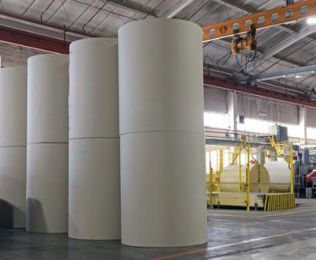
Going onto the list: uncoated, unbleached kraft paper in rolls or sheets weighing 150 gsm or less. Composite paper and paperboard, not surface-coated or impregnated. Self-adhesive paper and paperboard in strips or rolls over 15 cm wide. Coated printing paper impregnated or covered with plastics. Paper sacks with a base width of 40 cm or more. And pressure-sensitive paper and paperboard labels, not printed.
Read those two paragraphs again. The box is now cheaper to move. The paper you print on, and the label you stick to it, are not.
The irony is not subtle
For years the packaging conversation has been about the finished object — the shipper, the case, the display unit. That is where brand owners look, where retailers point, and where most of the tariff headlines landed. So when corrugated cartons came off the list, plenty of people in the trade reasonably assumed the pressure was easing.
It isn’t. It has moved one step upstream, into the raw material and the semi-finished component. Which means the converters who buy board and laminate and labelstock are the ones absorbing the swing, while their customers — the brands and the retailers — hear a story about relief.
That is a genuinely awkward position to negotiate from. If your customer has read that boxes are no longer tariffed, and you are about to explain that your labelstock just got more expensive, you are not having a pricing conversation. You are having a credibility conversation.
Canada has already fired back
None of this is happening in a vacuum. Canada announced retaliatory tariffs on American goods back in September, and the two lists have been chasing each other ever since. What began as a trade action has become a slow, grinding game of matching codes, and the people caught in the middle are the ones with fixed equipment, fixed leases and customers who want a quote valid for ninety days.
It is also, frankly, unresolved. Nobody has yet produced a clean number for what tariffs have actually cost the Canadian printing and paper industry — not the associations, not the analysts, not the companies themselves. What we have instead are anecdotes: a job that went south, a shipment held, a margin that evaporated between the quote and the invoice. Anecdotes do not help you budget. But they are what the industry has.
What a smart converter does this week
The plants that come out of this in decent shape will not be the ones with the best lobbying. They will be the ones with the least romantic approach to paperwork.
Start with a code audit. Pull your top twenty material purchases and match each to its tariff classification. Do not assume the buyer knows; do not assume your broker knows. Verify. The gap between 4811.41.10 and 4811.51.20 is not academic when the number attached to it is 50 percent.
Then look at your contracts. If you have been selling on open-ended price validity, stop. Add a tariff-adjustment clause that is specific about which codes trigger a repricing, and put a review date on it. Your customers will grumble. The ones worth keeping will sign.
Next, price the alternatives honestly. For some work, a different substrate is a straightforward swap. For others — food contact, high-barrier, anything with a regulatory file — it is a testing programme that takes months and costs real money. Knowing which is which before a customer asks is the difference between looking competent and looking caught out.
And finally, talk to your customers earlier than is comfortable. The single worst outcome here is a customer discovering a price increase at the same time they discover the reason for it. Converters who send a short, plain note explaining what changed, which codes are affected and what they are doing about it tend to keep the account. Converters who stay silent and then invoice higher tend to lose it, and they lose it over trust rather than money.
The bigger point
Tariff lists are not strategy. They are weather. But weather is exactly what determines whether a season is good or bad, and the businesses that survive bad weather are the ones that check the forecast instead of arguing with it.
The October 30 change is not the end of this story. It is another page. The products that came off the list can go back on. The ones added can move again. What will not change is that material cost, classification and contract language have become core commercial skills in a business that used to think of itself as being about ink on paper.
That is uncomfortable. It is also, for the converters who get good at it, an advantage. Most of your competitors will not read the list. They will read the headline.
Source: PrintCAN — Trump Changes Tariffs On Canadian Packaging