 中文
Process-free plates have spent years winning converts in commercial print, but newspapers remain the technology’s toughest proving ground: relentless nightly deadlines, huge plate volumes and zero tolerance for schedule slippage. That is what makes the experience of Le Télégramme’s printing plant in Morlaix, France, so instructive — a daily-news operation running more than 1,200 plates every night has completed the transition to Kodak’s process-free platemaking as part of a broader modernization program, and the numbers argue the case better than any brochure.
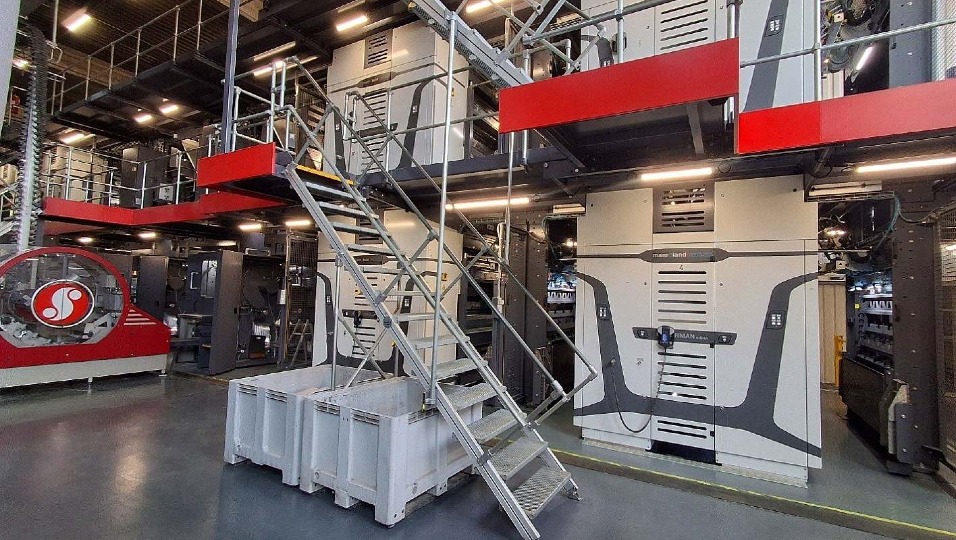
The scale of the operation deserves emphasis. The Morlaix plant produces 19 daily newspaper editions alongside weeklies, magazines, specialist publications and advertising materials, with daily output between 135,000 and 155,000 newspapers. At that volume, platemaking is not a support function — it is a production bottleneck candidate every single night. The transition to process-free production began in 2022 and coincided with replacing two Wifag rotary offset presses with a Manroland COLORMAN e:line press and reconfiguring the plate production area, linking the sustainability objectives to changes across the production operation rather than treating chemistry elimination as an isolated swap.
The plant was well positioned for the change: it had been running two KODAK GENERATION NEWS Z-speed Platesetters since 2012 and had a longstanding relationship with Kodak as a plate supplier. Even so, moving to process-free production required removing the plate processors and relocating the computer-to-plate equipment without interrupting newspaper schedules — a constraint that leaves no room for a “we’ll figure it out” approach. Kodak temporarily installed an additional GENERATION NEWS Platesetter to maintain production during the changeover, and local engineers and maintenance support helped the plant complete the transition without missing an edition.
The post-transition benefits, documented in Kodak’s case study, run across four dimensions. Time: plate production is shorter with processing steps removed from the workflow. Space: the prepress workshop gained room previously occupied by processing equipment. Maintenance: processor cleaning and maintenance simply disappeared — no chemistry lines to service, no processor breakdowns on deadline nights. And cost: eliminating processing chemistry also eliminated the associated chemical-waste treatment costs, reduced water and electricity consumption, and created a safer working environment for prepress staff who no longer handle processing chemicals.
Printing Director Yannick Le Bras credited Kodak with supporting the plant throughout its industrial transition, noting that the supplier “continues to support our progress toward ever-greater levels of performance and efficiency.” The phrasing is notable for what it implies: the plates change is viewed as one milestone in an ongoing modernization, not the finish line.
The economics for high-volume newspaper operations are worth spelling out, because they generalize. Processing chemistry, its disposal and the energy to manage both are recurring costs that scale linearly with plate volume — and at more than 1,200 plates per night, roughly 440,000 plates per year, even a modest per-plate saving compounds into serious money. Add the avoided risk of processor downtime on a deadline-critical workflow and the space recovered in a prepress area, and the total cost case for process-free at newspaper scale becomes close to self-evident. What was historically missing was proof at extreme volume, which Morlaix now provides.
There is also an environmental reporting angle that French and European publishers cannot ignore. Media groups face the same sustainability disclosure pressures as their advertisers, and platemaking chemistry is one of the easier wins to document: eliminated chemistry, reduced water and electricity, safer workplaces — metrics that map cleanly onto ESG reporting frameworks. A publisher that can show chemistry-free prepress across its printing operations has a tangible, auditable claim to include in group-level reporting.
For other newspaper and high-volume commercial operations still running process plates, the Morlaix case study lowers the perceived risk substantially: the technology has now been proven inside the least forgiving production environment print has to offer, executed alongside a full press-line replacement without missing editions. The remaining question for most converters is not whether process-free platemaking works, but how soon their own processor maintenance budget can be retired.
For commercial printers reading this outside the newspaper world, the transferable lesson is about sequencing modernization. Morlaix did not buy a plate technology and hope; it tied the chemistry elimination to a press-line replacement and a prepress reconfiguration, so every physical change in the plant pulled in the same direction. Print operations planning their own sustainability investments should steal that pattern: bundle the environmental win with a productivity project that justifies itself on speed or uptime, and the board conversation becomes radically easier. Nobody has to choose between green and profitable when the same project delivers both.
The maintenance angle also deserves emphasis for deadline-driven operations of any kind. Every processor removed from a prepress area is a component that cannot fail at 11 p.m. on a press-night. In packaging plants running two or three shifts, processor breakdowns are a chronic, budget-draining tax that rarely appears on any investment comparison spreadsheet because it hides inside maintenance line items. The Morlaix case makes that hidden cost visible by deleting it entirely. Process-free platemaking has crossed from environmental statement to operational upgrade — and for high-volume plants still running chemistry, the remaining justification is shrinking by the plate.
Source: inkish.news / Kodak, “Le Télégramme Optimizes with Kodak Process-free Plates”.