
 中文
Flexography has spent two decades closing the quality gap with gravure, and the FlexoTech Awards 2026 just handed the trajectory its latest milestone: Esko received the supplier Innovation Award for its CDI Quartz XPS ecosystem, an integrated flexographic platemaking solution built to push image quality, production consistency and operational efficiency to levels the company says can rival gravure — while keeping flexo’s production flexibility intact.
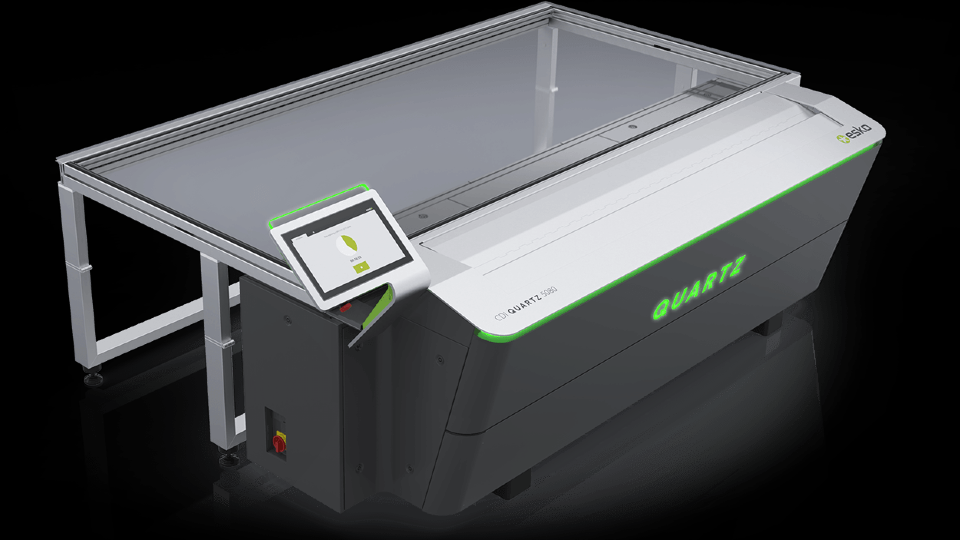
The technical heart of the Quartz ecosystem is a new optical platform capable of imaging at 4,000 pixels per inch, nearly twice the conventional industry standard. Higher imaging resolution alone would be a spec-sheet claim, but combined with advanced screening and Esko’s Crystal XPS LED exposure technology, it enables something more consequential: microscopic 2,000 lines-per-inch Q-Cell surface structures across solid areas and halftone dots. These precisely engineered micro-structures improve ink transfer, delivering smoother solids, cleaner highlights, sharper detail and more consistent tonal reproduction — the four characteristics on which flexo’s gravure comparison has historically stumbled.
The ecosystem framing is as important as any single component. Quartz integrates the CDI Quartz imager, Crystal XPS LED exposure, Quartz screening software and the Flexo Front End into a coordinated platemaking workflow, and imaging parameters can be optimized automatically according to plate type, substrate, anilox specifications, press configuration and ink set. That last capability attacks the flexo industry’s oldest problem: variability. When every plate type and press condition demands manual parameter tuning, results drift between operators, platesets and sites. Automatic optimization reduces process variability and improves repeatability between jobs — which, in a multi-site converter network, is the difference between brand-approved color everywhere and brand-approved color somewhere.
Two screening options address different production requirements. Variable Highlight Q-Cells (VQ) focus on solid ink density and smooth highlight transitions, while Stochastic Q-Cells (SQ) extend tonal range for demanding high-definition graphics. The availability of both within one ecosystem lets converters match screening strategy to application rather than compromise with a single tool.
The claimed commercial returns are specific and, if realized across a plant, material. Esko reports solid ink density improvements of up to 0.7, reductions in pinholes and dot bridging, improved barcode and reverse-text reproduction, and potential ink savings of up to 20 percent through the use of lower-volume anilox rolls. That last figure deserves attention from finance departments as much as prepress managers: ink is among the largest recurring consumable costs in flexo production, and a double-digit percentage reduction changes plant-level margins, not just proof quality.
The sustainability dimension is baked in rather than bolted on. The system supports water-based inks and printing on substrates containing high levels of post-consumer recycled material — two requirements that are rapidly shifting from differentiators to procurement mandates as brand owners pursue packaging recyclability targets and regulatory pressure mounts on flexible packaging formats. Flexo’s ability to run water-based ink systems at scale on recycled-content substrates is precisely the combination that keeps it competitive as brands redesign for circularity.
Esko says European flexographic prepress operations are already evaluating the technology, and the award jury’s recognition signals that the industry’s technical community sees both the engineering substance and the commercial potential. The FlexoTech Innovation Award has a track record of flagging technologies that subsequently become category standards — Crystal XPS itself followed that path — and the Quartz platform’s specification suggests it is aiming for similar adoption.
For converters, the strategic calculus is becoming clearer. Flexographic platemaking has effectively become a software-defined discipline: imaging resolution, micro-cell engineering, LED exposure curves and automated parameter selection now determine print quality more than press hardware does. Plants that invest in coherent ecosystems — imager, exposure, screening and front end designed together — will compound quality and efficiency gains, while those assembling mismatched components will keep buying the same variability they are trying to eliminate.
Gravure will retain its strengths in the longest runs, but with ecosystems like CDI Quartz XPS earning industry awards, the range of work where flexo delivers gravure-class quality at flexo economics keeps widening. That widening is the quiet revolution of modern packaging print, and the FlexoTech judges have just marked its latest waypoint.
For prepress managers evaluating whether this ecosystem applies to their plant, a practical framing helps: the value concentrates where variability hurts most. Single-site shops running one press with one plate type may capture only part of the automatic-optimization benefit; multi-site groups running mixed presses, substrates and ink systems — where every plateset behaves slightly differently — should see the compounding returns Esko’s consistency claims target. The barcode and reverse-text improvements alone are worth piloting for any converter serving retail supply chains, where a failed scan grade triggers chargebacks that dwarf the cost of better plates.
The ink-savings claim deserves a due-diligence checklist rather than skepticism. Verify the anilox changeover cost, confirm the ink volume baseline with real consumption data from your own plant, and run a controlled A/B on a representative job family before banking the savings in next year’s budget. That said, the directional logic is sound — finer, more uniform ink transfer means less ink wasted in laydown and fewer retry runs — and even half the claimed reduction would rank among the largest single consumable savings available to a flexo plant this decade. The FlexoTech jury has marked the waypoint; the converters who move first on ecosystem-grade platemaking will spend the next few years proving the economics on their own P&Ls, one shorter ink invoice at a time.
Source: inkish.news / Esko, “Esko CDI Quartz XPS Wins FlexoTech Innovation Award for Advancing Flexographic Print Quality”.


