中文
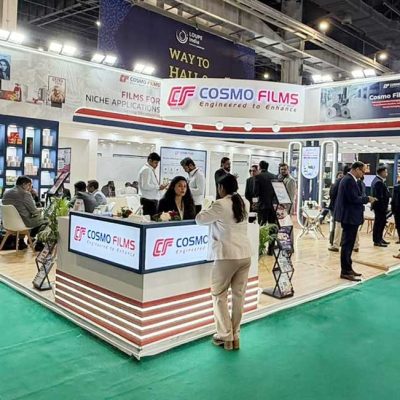
The Indian label market is growing fast, and ink suppliers are competing to solve the problem that keeps converters awake at night: how to invest in one curing technology without betting the business on it. hubergroup Print Solutions believes it has the answer, and the company is presenting it at Loupe India 2026, held from 29 October to 1 November at Hall 11, Stand L-24.
The star of the stand is the iray Dual Cure UV flexo ink series, designed to help label converters increase flexibility and productivity while transitioning to more energy-efficient technologies. The system’s defining feature is in the name: it can be cured with both conventional mercury UV lamps and LED UV systems, meaning a converter can run the same ink today on existing equipment and tomorrow on an LED retrofit — without reformulating, requalifying or retraining.
One Ink, Two Futures
For pressure-sensitive labels, premium labels and other demanding applications, that flexibility is more than a convenience. LED curing reduces energy consumption and removes mercury lamps from the maintenance schedule, but the transition often stalls because ink systems tuned for mercury lamps can behave differently under LED arrays. A dual-cure formulation removes the cliff edge: converters upgrade lamps on their own schedule, keeping a single ink inventory and qualification record across mixed pressrooms.
hubergroup notes that converters in the Indian label market face growing demands for higher productivity, shorter lead times and greater operational efficiency. The company said the ink system combines print performance with production flexibility, delivering strong colors, high gloss, resistance properties and reliable adhesion across a wide range of label substrates — from coated papers to demanding filmic constructions used in personal care and premium beverage labeling.
Curing behavior and stable press performance also help minimize production interruptions, start-up waste and reprints, according to the company. In a segment where short runs and rapid changeovers dominate, every avoided start-up wash-up compounds directly into margin.
Investment Security as a Sales Argument
“Converters are looking for technologies that deliver both performance and investment security,” said Carsten Zölzer, CCO Print Solutions at hubergroup. “With iray Dual Cure, customers can benefit from outstanding print quality and press performance today while maintaining flexibility for future technology developments.”
The framing is deliberate. Indian label converters are in the middle of a capital-intensive upgrade cycle — new presses, wider webs, inspection systems and increasingly LED retrofits — and every buying decision carries technology risk. By positioning dual-cure chemistry as insurance against picking the wrong curing path, hubergroup is selling continuity as much as color.
India as a Strategic Market
India is a strategically important market within hubergroup’s long-term growth strategy, and the company is backing that claim with infrastructure. Customers can rely on dedicated sales, technical service and application support teams, while drawing on the experience of hubergroup’s international network of specialists. Visitors to Stand L-24 will be able to discuss market trends, production challenges and application requirements with the company’s experts — a consultative approach that mirrors how the company operates in its more mature European markets.
“We want visitors to leave our stand with the understanding that hubergroup is more than an ink supplier,” added Amit Dammani, business head, packaging solutions at hubergroup India. “We work closely with customers to optimize processes, improve productivity and support their long-term business success.”
The Broader LED Transition
The iray Dual Cure push lands at a moment when LED curing is moving from early-adopter territory to mainstream consideration across India’s label sector. Energy costs, sustainability reporting and the phase-down pressures around mercury-based technologies are all pushing converters toward LED — but uneven access to LED-optimized chemistry has slowed adoption among smaller presses. Dual-cure systems directly address that gap.
For the wider flexo ecosystem, the message from Greater Noida this week is clear: the chemistry layer is adapting so that hardware decisions no longer have to be permanent. Converters who attend the show will be weighing that promise against the reality of their own pressrooms — and hubergroup is betting that flexibility, not just performance, is what wins the order.
The economics of the dual-cure decision reward close inspection. A converter migrating to LED typically faces a full requalification cycle — new ink sets, new anilox specifications, revised color standards and customer re-approval on every stocked design. For a label operation running hundreds of active SKUs, that requalification alone can consume months of production capacity and a substantial technical budget. A chemistry that eliminates the requalification entirely converts the LED transition from a disruptive project into a scheduled maintenance event, which changes the investment math considerably — particularly for mid-sized converters without dedicated R&D resources.
The stand presentation also reflects hubergroup’s broader repositioning under its Print Solutions identity. Rather than competing purely on ink price per kilogram, the company is selling process outcomes: fewer start-up rejects, stable press speeds across job mixes, and a migration path that protects prior investments. In the Indian label market, where competitive differentiation increasingly depends on service depth rather than list prices, that positioning gives converters a reason to consolidate their ink supply with a partner who can support the whole transition — and gives hubergroup a defensible position in one of the world’s fastest-growing label markets.
Source: thepackman.in