中文
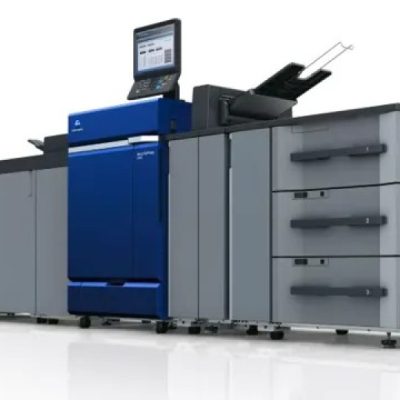
The digital flexible packaging market has been waiting for a signal that inkjet can handle not just short runs and prototypes, but sustained, high-volume production across a global network. That signal arrived with the announcement that Fujifilm and ePac Flexible Packaging have formed a global strategic alliance centered on the Fujifilm Jet Press FP790, a digital press ePac will deploy to increase speed and capacity for high-volume flexible packaging across its worldwide operation.
Deployment begins in North America with a press installation at ePac’s new facility in Phoenix, Arizona, with the fleet planned to expand to other ePac locations in later phases. The phased rollout gives Fujifilm a flagship reference site in one of the world’s most demanding packaging markets, while ePac gains a scaling path built around a single, proven platform.
An Alliance With a Thesis Behind It
According to the companies, the partnership underlines Fujifilm’s commitment to bringing digital flexible packaging solutions into the mainstream, and is expected to enable ePac to extend its business model and support brands at every stage of their growth.
“ePac was founded on the belief that digital printing would redefine the global flexible packaging market,” said Parag Patel, president of shared services at ePac Flexible Packaging. “By continuing to integrate leading-edge assets into our fleet, we are significantly increasing our capacity and capability to handle larger run lengths efficiently. ePac has always been focused on helping brands grow through professional packaging, and as they scale, their needs evolve. Incorporating this technology gives brand owners of all sizes the continued agility of digital while providing a true end-to-end scaling solution for flexible packaging.”
The quote captures the core of ePac’s franchise model: brands start with digital for agility — short runs, fast turnaround, regionally produced — and the best of them graduate into volumes that historically forced a migration to conventional printing. An inkjet platform engineered for high volume means ePac can follow customers up the curve instead of losing them to gravure or flexo suppliers at scale.
Fujifilm’s side of the argument is equally direct. Osamu Nakashima, corporate vice president of Fujifilm Business Innovation, said: “This alliance brings together two powerhouses dedicated to the digital transformation of global packaging. We have put huge emphasis on digital packaging in the latest developments to our portfolio, and our flagship J Press FP790 is engineered specifically to transform flexible packaging manufacturing. ePac’s forward-thinking model makes them the ideal global strategic partner to demonstrate its power.”
What the FP790 Brings to the Floor
The Jet Press FP790 is designed for high-volume flexible packaging, with support for recyclable material structures. It prints at a resolution of 1200 x 1200 dpi, covers over 90 percent of the Pantone color gamut, and uses water-based inks described as eco-friendly and food-safe. The company said the press will allow ePac to increase throughput while retaining its short-run, on-demand capabilities — important for brands that need to remain nimble in the current market.
Each specification targets a known friction point in packaging digitalization. The wide gamut reduces the dependence on spot-color inventories. Water-based, food-safe ink chemistry simplifies compliance conversations with brand owners in sensitive categories like food and pet care. Recyclable structure support aligns with the sustainability mandates now written into most major retailers’ packaging policies.
Why This Deal Matters Beyond the Two Companies
For the industry at large, the significance is the validation chain. ePac operates a distributed network of production facilities serving thousands of brands — precisely the customer profile that conventional wisdom said could never run digital for volume work. A multi-site FP790 fleet, operating at production scale across North America and beyond, will generate the uptime data and unit-cost evidence that hesitant converters have been waiting for.
It also sharpens the competitive landscape. Digital flexible packaging has so far been contested by toner-based and early inkjet systems, each with trade-offs around speed, cost per square meter and substrate latitude. A global alliance between a major imaging vendor and the most digitally committed converter in the category raises the bar for everyone else.
The Phoenix installation will be the number to watch. If it delivers the throughput and reliability the alliance promises, expect announcements about the “later phases” — additional ePac locations — to arrive quickly, and expect other global converters to revisit their own digital roadmaps in response.
The alliance structure itself deserves attention. Rather than a simple equipment purchase, the arrangement positions Fujifilm as a strategic technology partner across ePac’s expansion roadmap — with phased deployments, shared learnings across sites and presumably coordinated development feedback from production floor to R&D. For Fujifilm, that access is gold: the fastest way to mature a young digital packaging platform is to run it hard inside the most digitally committed converter in the category, and fix what breaks. For ePac, it means priority access to platform evolution and a vendor whose roadmap is now invested in ePac’s success.
The competitive read for other converters is uncomfortable but clarifying. If the FP790 fleet performs as promised in Phoenix — sustained high-volume output with digital economics on runs that previously demanded flexo — then the window in which digital flexible packaging was a niche differentiator closes quickly. Converters who have been running pilot digital presses will face a fleet-scale competitor with institutional experience measured in years, not months. The pragmatic response is already visible across the industry: pilot programs converting into production commitments, and equipment vendors across the spectrum accelerating their own wide-gamut, water-based packaging platforms to keep pace.
Source: thepackman.in