 中文
中文If you have ever tried to print a logo onto a bottle, a golf ball, a phone case or a medical device, you already know the nightmare: there are a dozen ways to do it, and almost no easy way to compare them without buying half of them first. Direct-to-object (DTO) printing is one of the fastest-moving corners of the industry, and also one of the most confusing for the shop owner who just wants the right tool for the next job rather than a showroom of possibilities they cannot tell apart.
Engineered Printing Solutions — EPS — is cutting through that confusion at PRINTING United Expo, where it will show what it calls the industry’s broadest DTO line-up at booth C2137. The trick is not just showing one machine; it is letting visitors compare decoration technologies side by side. Pad printing, single-pass inkjet, multi-pass inkjet and robotic printing will all be there, on the same floor, doing the same kind of real work. That is rare, and it is genuinely useful because comparison is how buyers actually learn what they need.
That side-by-side setup matters because the “best” DTO method depends entirely on the object. A promo product with a flat-ish surface wants something different from a cylindrical drinkware item, which wants something different from an irregular industrial part with recesses and curves. Seeing the options next to each other — and talking to people who have run all of them in production — saves a buyer from expensive mistakes that would otherwise show up as a pallet of mis-decorated rejects and an angry call from the client.
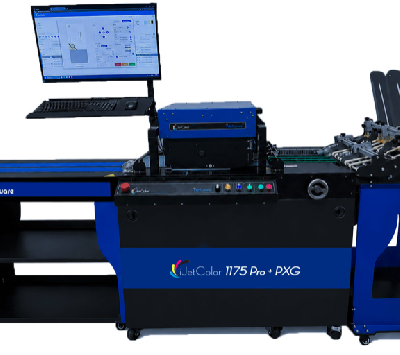
The star of the booth will be the XD-R robotic printing system, which pairs automated product handling with decoration so the part moves through without a human constantly loading and unloading. For high-mix, high-volume shops, that automation is where the labour savings live, and where output stops being capped by how many hands you can hire at a wage you can afford. Alongside it, EPS will show the KP08 pad printer, the XD Series single-pass printer and its multi-pass DTO platform, covering the full spectrum from low-cost manual-adjacent work to fully automated lines that run unattended between breaks.
Pad printing still earns its keep for awkward shapes and recessed surfaces where inkjet simply cannot reach a consistent film — think inside a cone or around a tight radius. Single-pass inkjet wins on speed for flat and slightly curved objects where throughput is king. Multi-pass systems trade speed for coverage on complex geometries. And robotics ties the whole thing together when the part itself is the variable, handling orientation, loading and unloading so the printer only ever sees a perfectly presented surface. None of these is “the future” in isolation; they are tools, and the art is matching the tool to the job and the margin.
For a shop trying to choose, a simple decision framework helps. First, profile the part: is it flat, cylindrical, or irregular? Second, count the volume and the variation — a million identical units favours single-pass; a thousand one-offs favours flexible pad or robotic. Third, be honest about labour: if you cannot staff a manual line, automation is not a luxury, it is the only way the job gets done. Answer those three and the “maze” shrinks to one or two sensible candidates.
For brands and manufacturers, the takeaway is that DTO is no longer a niche novelty for trade show tchotchkes. It is becoming a core decoration strategy for product personalisation, short runs and quick turnarounds — the exact things modern consumers and supply chains demand. The shops that thrive will be the ones who can look at an object and instantly know which of these four paths gets the best result at the right cost, rather than defaulting to the one machine they already own and forcing every job through it.
EPS is betting that, instead of pitching one solution, the smarter play is to be the place where you figure out which solution is yours. If you are heading to PRINTING United, booth C2137 is worth a deliberate stop rather than a walk-by — bring a tricky part and let the comparison do the selling.
The deeper point for buyers is that choosing a DTO method is a workflow decision, not a catalogue decision. A shop that mostly runs millions of identical promotional bottles should optimise for single-pass throughput, while one serving a hundred customised gifts a day needs flexible pad or robotic capability. Getting this wrong means buying the wrong machine and blaming the technology when the real error was matching the tool to the wrong job. EPS’s side-by-side booth is valuable precisely because it forces that matching to happen in front of your eyes, with real parts, before any money changes hands.
Source: Specialist Printing Worldwide (www.specialistprinting.com)