 中文
中文Australia’s largest trade print operation has installed its second Komori Lithrone GX40RP eight-colour perfecting press at its Keilor Park facility, completing a plan that was in place before the first machine arrived. CMYKhub put in the initial press less than twelve months ago, and the business always intended to run identical machines side by side.
That intention is the most instructive part of the story. Buying two of the same press is a specific operational strategy, and in the trade printing model it is close to a structural requirement.
Redundancy as a product feature
A trade printer sells capacity and reliability to other printers. Its customers have committed to their own clients on delivery dates and have chosen to outsource rather than produce in house. If the trade supplier misses, the failure propagates down a chain the trade printer cannot see or manage.
Running two identical B1 perfectors means any job scheduled on one press can move to the other without re-imposition, without recalibrating colour to a different press profile, and without operators adapting to unfamiliar controls. A breakdown becomes a scheduling adjustment rather than a missed deadline. CMYKhub is explicit that the identical configuration exists to guarantee production for trade customers.
The benefit extends past failure scenarios into everyday operations. Two matched presses mean a colour-critical repeat job produces the same result regardless of which machine runs it, which matters enormously for brand work where a reprint sitting alongside the original will be compared directly.
The productivity mechanics
Beyond redundancy, the second press addresses a growing offset workload and provides headroom for continued growth. The company expects a significant increase in press hours per shift.
The most concrete efficiency gain is in stock handling. CMYKhub notes that one press may run heavier stock while the other runs lightweights, cutting down changeover times.
This is a bigger saving than it first appears. Switching a B1 press between heavy board and lightweight stock involves feeder and delivery adjustments, and on a perfector the sheet path through the reversing section is particularly sensitive to substrate weight. Getting a press stable again after a substantial stock change consumes press time and makeready waste. Dedicating each machine to a weight band for the duration of a shift removes that cost repeatedly through the day.
For a trade printer running many short jobs across widely varying specifications, changeover time is the dominant efficiency variable. Rated press speed matters far less than how much of a shift is spent producing rather than converting from one job to the next.
The argument to customers
CMYKhub frames the expansion as a proposition to printers still running their own offset equipment. With the additional production capability in place, the company argues there is a diminished reason for customers to keep offset printing in house, and that they can instead take advantage of the latest advanced press technology.
That argument reflects a real pressure on mid-sized commercial printers. A modern eight-colour B1 perfector represents capital that only pays back at high utilisation. A printer running such a press at partial capacity carries the full cost of ownership while producing a fraction of the output it was specified for. Outsourcing to an operation that keeps two of them busy converts a fixed cost into a variable one.
The counter-consideration, which every printer weighs, is control over scheduling and quality. That is precisely why the duplicate-press strategy matters commercially: it directly answers the reliability objection that keeps work in house.
Twelve years with one supplier
CMYKhub has run Komori presses at its Melbourne plants for a dozen years. A company spokesperson cites productivity, roller power, consistency and flexibility as the reasons for continuing to invest with the Japanese manufacturer, represented in Australia and New Zealand by Print & Pack.
Long-term single-supplier relationships in offset are usually driven by accumulated operational fit rather than sentiment. Operators trained on one control philosophy, an established spares inventory, known service response and consistent colour behaviour across the fleet all reduce risk in ways that a specification comparison does not capture.
On the technology itself, Komori positions the Lithrone GX40RP and GX44RP advance around double-sided one-pass printing built on a stable sheet path, claiming impressively high production on both light and heavy stocks. The manufacturer also highlights a gripper transfer process that removes the need for sheet tail margins, which it says significantly reduces paper costs.
Tail margin elimination is worth noting as a substantive economic claim rather than a specification detail. Paper is typically the largest single cost in an offset job. Recovering the strip conventionally reserved for grippers on the reverse side either yields more usable area per sheet or allows a smaller sheet for the same finished size. Across the volume a trade printer runs, that compounds into a genuine cost position rather than a marginal improvement.
Scale in context
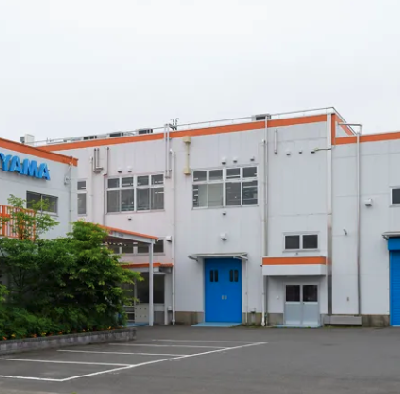
The presses sit in a 7,000 square metre trade print facility at Keilor Park, which CMYKhub moved into last September and describes as the biggest new print centre opened in recent years anywhere in Australia.
Committing to a facility of that scale and then filling it with duplicated B1 capacity inside a year is a straightforward reading of where the company expects trade volume to consolidate. As individual commercial printers find their own offset utilisation harder to justify, the work concentrates with operations built specifically to absorb it.
Source: Print21, “CMYKhub installs second B1 Komori perfector” by Wayne Robinson, 7 August 2026.