
 中文
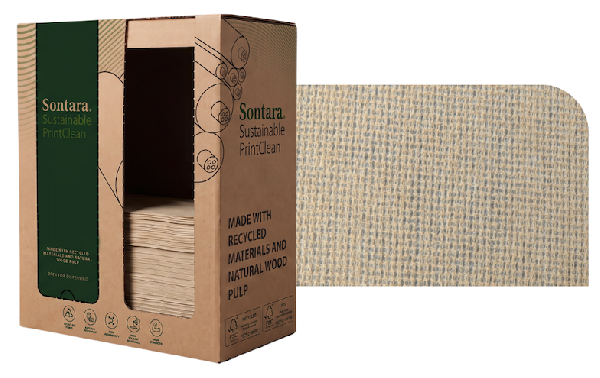
Ask any pressroom veteran what they think about washcloths and you will usually get a grunt, not a conversation. Washcloths are consumables. They clean the blankets, they get tossed, nobody writes LinkedIn posts about them. And yet the little decisions, the ones repeated thousands of times a year on every offset press in the world, are exactly where an industry’s environmental footprint actually lives.
That is why the latest launch from Sontara is more interesting than it sounds. The company has introduced a new sustainable printing range for the offset sector, and the headline product, Sontara Sustainable PrintMaster, is the first rPET-based ABC washcloth ever to achieve Fogra certification. Let that sink in for a second. A washcloth made from post-consumer recycled PET bottles has now passed the same rigorous testing regime that German print research bodies apply to the most critical consumables in the pressroom.
What is actually in the cloth
The sustainable range covers two products: PrintMaster for automated blanket wash systems, and Sontara Sustainable PrintClean for manual cleaning jobs around the press. Both are manufactured from post-consumer recycled PET sourced from GRS-certified suppliers, blended with natural wood pulp. The company says the wood pulp route requires less chemical processing than conventional alternatives, which is also why the cloths have that distinctive brown appearance. No bleaching to fake a clean look. The cloth is brown because it skips a chemical step, not despite it.
The numbers attached to the launch are worth a closer look. Compared with standard Sontara printing cloths, the sustainable range offers 40% lower product CO2 emissions. And because the products are made in Europe, the company says transport-related CO2 emissions can drop by up to 70% compared with supplies shipped from the Far East. For European printers staring down the barrel of CSRD reporting and customer sustainability questionnaires, those are figures you can actually put on a form.
Twenty years of pressroom credibility
None of this would matter if the cloth underperformed on press. Washcloth failures are not subtle: solvent-soaked rags that disintegrate in automated wash systems, leave lint on blankets, or clog filtration will cost a printer far more in downtime and waste than any green premium saves. Sontara, which positions itself as the original manufacturer of printing cloths with more than 20 years in the industry, has spent decades working with leading press manufacturers and Fogra to develop cloths that meet the industry’s performance standards. Its products are used in offset press cleaning systems worldwide. The Fogra certification on PrintMaster is the credibility anchor here, because it signals the recycled material has been engineered to behave exactly like the conventional cloth it replaces.
The bigger picture for consumables
Zoom out and this launch fits a pattern. Printers have spent years greening their paper, their inks, their plates and their energy supply. Chemistry and consumables were harder to move, because performance risk is immediate and unforgiving on a production schedule. Certification-first products like this one lower the barrier. When the research institute has already done the testing, the pressroom’s decision becomes much simpler.
Is a washcloth going to save the planet? No. But multiply one pressroom’s washcloth consumption by every offset press on the continent, add the freight savings of European manufacturing, and the arithmetic starts to look real. Sometimes sustainability is not a grand gesture. It is just a better brown cloth, doing the same job, with a smaller shadow behind it.
Printers evaluating the range should trial PrintMaster in their automated wash systems and PrintClean for manual applications, and check how the CO2 figures slot into their own reporting. The consumables aisle just got a little more interesting.
The certification path is worth understanding, because it explains why this took so long. Fogra does not hand out certifications for intentions. An ABC washcloth has to prove it can survive automated wash cycles without shedding fibres, that it transports solvent efficiently to the blanket, that it leaves no residue that will ghost the next job, and that it performs consistently batch after batch. Recycled PET introduces a variable conventional cloths never had: the feedstock itself changes from batch to batch depending on what the recycling stream delivers. Engineering consistency out of inconsistency is the real technical achievement here, and it is what separates a certified product from a green-flavoured experiment.
For printers planning their 2027 consumables purchasing, the practical advice is simple. Request trial quantities, run PrintMaster through your automated wash system on a representative mix of jobs, and compare blanket life and wash quality against your current cloth over a meaningful sample, not a single shift. Then take the CO2 figures to whoever fills in your sustainability reporting and your biggest customers’ supplier questionnaires. The printers who win the next round of brand-owner audits will be the ones who can show documented improvements in unglamorous places like this, not just statements about renewable energy on the roof.
Source: PrintCAN, October 2026.


