中文
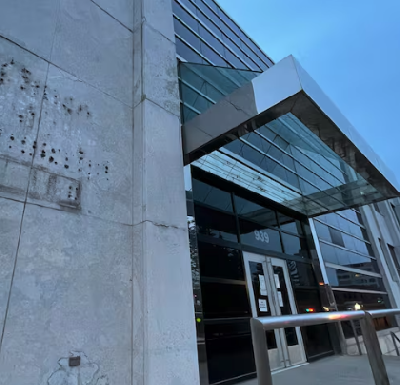
Let’s not sugarcoat this one. Transcontinental has announced it will permanently close its RBW printing plant in Owen Sound, Ontario, at the end of January 2027. Roughly 360 people will lose their jobs. That is not a line item on a spreadsheet. That is 360 families, 360 sets of Christmas plans, 360 mortgages and car payments suddenly sitting on shakier ground.
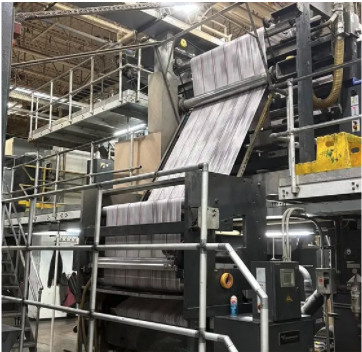
For anyone outside the industry, RBW might not ring a bell. Inside Canadian printing, it is a landmark. The Owen Sound operation is a heat set web printing plant, the kind of facility that churns out magazines, flyers, catalogues and directories by the millions of copies. In its 2015 heyday, more than 600 people worked there. Even now, after years of quiet contraction, it remains one of the largest printing operations in the entire country.
The long goodbye of long-run printing
The official explanation from Transcontinental is straightforward: improvements at its other printing facilities, combined with changes in customer demand, mean the company can handle all of Owen Sound’s work elsewhere. Production will be consolidated into five other plants across the Canadian network. If you run the math, that is the story of the entire commercial print sector compressed into one decision. Print volumes for traditional heat set products are not growing. When demand shrinks, you do not need ten big machines across ten plants. You need fewer, faster ones running closer to capacity.
The company says many employees are expected to keep working until January, and some may have chances to transfer to other Transcontinental locations. Transfers, of course, are easier said than done when your whole life is built around one town. Owen Sound is not Toronto. You cannot quietly commute from Grey-Bruce to Winnipeg or Montreal.
A plant older than most of its workers’ grandparents
Here is the part that stings for the history books. The plant began life in 1907 as Richardson, Bond & Wright, which means it has been printing through two world wars, the Depression, the rise of television, the internet, the smartphone, and the entire digital revolution. Transcontinental bought RBW back in 1992, and for decades the plant was known locally simply as RBW Graphics. Locals will tell you generations of the same families have worked inside it.
The news of the closure has apparently travelled far, with coverage reaching as far away as Taiwan, which tells you something about how closely the global print industry watches these consolidation moves. When one of the largest heat set operations in a G7 country shuts down, everyone reads the tea leaves.
What it means for the rest of the market
For Canadian print buyers, the immediate effect may be invisible. Transcontinental remains the largest printer in the country, and moving work to five other facilities should keep customer supply uninterrupted. But the structural message is hard to miss: capacity in traditional long-run commercial print keeps consolidating, and every consolidation shifts pricing power a little and squeezes another region’s industrial base.
For the workers, the practical question is what comes next. Heat set web operators, bindery staff, press crews, these are skilled trades, and skilled trades in printing do not always map neatly onto the jobs that are growing nearby. Some will transfer. Some will retire early. Some will retrain. Communities like Owen Sound have watched manufacturing walk away before, and they know the drill, which is exactly what makes it exhausting.
The printing industry loves to talk about its future in packaging, in digital, in short-run customisation. All true, and Transcontinental itself has been pivoting hard into flexible packaging for years. But days like this one remind us that the transition has a human cost that press releases never quite capture. 360 people in Owen Sound will spend this holiday season knowing exactly when their plant goes dark. The rest of the industry should take note, not just of the economics, but of the people.
Consider what a heat set web plant actually represents in 2026 economics. These presses are built for enormous runs: a million catalogues here, a couple of million flyers there. The advertisers who used to fund that volume have not vanished, but their budgets have migrated to digital channels where spend is measurable to the impression. Magazines thin out, flyers become letterbox drops with shorter lead times, directories simply stop existing. Every year the pool of work suited to a giant web offset line shrinks a little more, and the plants left standing are the ones their owners judged cheapest to close last.
There is also a lesson here for printers on the buyer side of the equation. Consolidation events change supplier risk overnight. If your catalogues, inserts or publication work ran through Owen Sound, your production has just been reassigned to a plant you may never have visited, in a network that is now running closer to its limits. Smart print buyers will already be asking their suppliers hard questions about capacity, contingency and pricing before the January deadline arrives, because the moment to renegotiate is before a capacity crunch, not during one.
Source: PrintCAN, October 2026.