
 中文
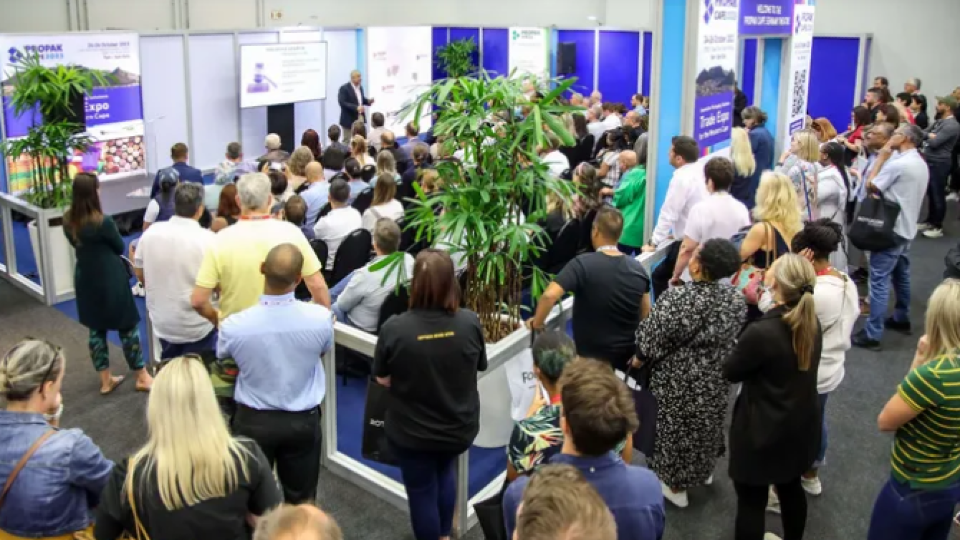
Packaging businesses weighing sustainability expectations against production demands will find both on the agenda at the Institute of Packaging SA’s seminar programme during Propak Cape 2026. Running alongside the exhibition at the Cape Town International Convention Centre from October 27 to 29, the free programme covers developments affecting packaging design, material selection, recycling, and manufacturing efficiency. IPSA national secretary Bill Marshall will open proceedings with design trends emerging from the 2026 Gold Pack Awards and Student Gold Pack Awards, setting a practical, locally rooted tone for the event.
The exhibition will feature packaging, food processing, plastics, printing, and labelling solutions, giving visitors the chance to connect seminar discussions with technologies and specialists on the show floor. Sustainability sessions will examine the relationship between packaging design and recycling outcomes. Edwin Botha of Fibre Circle will explore the gap between sustainability and recyclability, while Tetra Pak’s head of sustainability for Sub-Saharan Africa, Masale Manoko, will discuss expanding South Africa’s carton collection and recycling economy through collaboration, technology, infrastructure investment, community empowerment, and consumer education, a holistic view of what collection actually requires.
Technology presentations will include Bobst’s One Barrier programme, presented by Manuel Cortizo, and EVO GEN3 Packaging Films for a Circular Economy, presented by Sascha Skora. Together these sessions address material development alongside the infrastructure and participation needed to support collection and recycling at scale, making clear that a recyclable material is only as good as the system that recovers it.
Extended Producer Responsibility will be another central theme, with a panel including Dr Kishan Singh, Janine Osborne, Keith Anderson, Makgabo van Niekerk, and Telly Chauke examining delivery, stewardship, regulation, compliance, and the future of South Africa’s packaging industry. Practical sessions will also cover food safety and FSSC 22000 certification, reflecting the full arc from material innovation to regulatory readiness, so that attendees leave with both vision and compliance detail.
For the Southern African packaging sector, Propak Cape arrives at a moment when recyclability and EPR compliance are shifting from aspirational to mandatory. Converters and brand owners that engage early with collection infrastructure and design-for-recycling principles will be better positioned as regulation tightens. The combination of an open seminar programme and a working exhibition floor makes the event a practical venue for aligning technical capability with policy direction, rather than treating sustainability and production as opposing forces.
The South African context gives the EPR discussions particular weight. The country has wrestling with low collection rates for many packaging streams, and the policy shift toward producer responsibility is an attempt to fund and organize recovery that voluntary efforts have not delivered at scale. For converters, that means design decisions made today will determine compliance costs tomorrow, which is why the design-versus-recyclability sessions matter as much as the technology showcases.
There is also a regional economic dimension. Southern Africa’s packaging industry supports food security, pharmaceutical access, and consumer goods distribution, so the sustainability conversation cannot be purely environmental; it must also be pragmatic about cost and availability. Sessions that pair material innovation with infrastructure reality, as several at Propak Cape do, reflect that balancing act better than abstract circularity rhetoric.
For international suppliers exhibiting at the show, the event is a window into a market where regulatory change is creating demand for barrier films, recyclable cartons, and compliant mono-materials. Bobst’s One Barrier and similar programmes speak directly to converters needing to replace multi-layer structures that are difficult to recycle. Propak Cape 2026, in short, is where Southern Africa’s packaging sector reconciles its growth ambitions with the environmental and regulatory constraints that now shape them, and the seminar programme is the place those tensions get worked through in public.
Source: https://inkish.news/en/article/propak-cape-2026-puts-packaging-in-focus


