 中文
中文For more than a decade, the printing industry has poured its energy into automating the production floor. Digital workflows, automated prepress, JDF job tickets and lights-out finishing lines are now routine in well-run plants. Yet walk into the same shop and open the front office, and the story often looks very different. Quotes still live in email threads. Job specifications get rekeyed by hand. Critical knowledge sits in the heads of a few long-tenured staff. That gap between a modern pressroom and an analog front office is no longer just inefficient, it is a competitive liability.
The shift is being driven by buyers. Today’s print customers expect the same speed and self-service they get from every other commercial transaction they make online. When a procurement manager can reorder toner from a phone in two taps, a three-day email volleyball match to get a quote feels archaic. Print businesses that close that expectation gap are winning work; those that do not are quietly losing it to more agile competitors.
This is the backdrop for a new chapter in WhatTheyThink’s long-running Technology Outlook Week. On Thursday, August 27 at 1 pm ET, analysts Pat McGrew and Ryan McAbee will host a practical session on where print shops should focus their front office automation efforts, what the technology options actually look like, and how an emerging practice called “vibe coding” fits into the picture. The framing is deliberately hands-on: not a vendor pitch, but a guide to where the real leverage is.
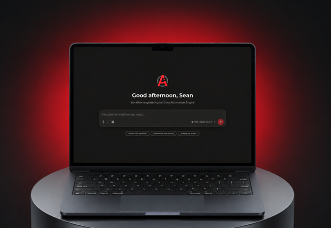
Vibe coding deserves a closer look, because it is easy to misunderstand. At its core, vibe coding describes a workflow where a business user describes what they want in plain language and an AI-assisted environment produces working software or automation. For a print owner who has always wanted a small internal tool, a connector between the web-to-print portal and the MIS, or a simple dashboard that flags stalled jobs, vibe coding lowers the barrier to building it. McGrew and McAbee plan to treat it as a tool with genuine promise, but one that demands clear expectations before anyone puts it to work in a production environment.
The session will answer three questions every printer should be asking. First, what are a print business’s actual front office automation options today, from rules-based workflow engines to AI-assisted assistants? Second, why does front office automation matter now, when margins are thin and skilled office staff are hard to find? And third, what is vibe coding in practice, and what are the guardrails that keep it useful rather than risky?
Technology Outlook Week itself is structured as a virtual platform for suppliers to reach producers and for producers to stay current as they plan for the future. Alongside the front office session, the series covers production print (August 24, Mary Schilling), display graphics, signage and textiles (August 25, Richard Romano and Cary Sherburne), labels and packaging (August 26, David Zwang), and appearance management (August 28, Don Carli). The sessions draw on some of the industry’s best-connected analysts, who stay in close contact with suppliers to keep the information current.
For printers, the takeaway is simple but uncomfortable: the easy automation wins on the production side are largely captured. The next wave of productivity, and the next wave of customer experience differentiation, sits in the office. The shops that treat quoting, job intake, proof approvals and status communication as engineering problems, not just administrative chores, will compound those gains year after year.
Can’t make the live broadcast? A complete archive of slides and audio is made available for download after each session, so the value is not lost for those in different time zones or with conflicting schedules.
The deeper point is cultural. Front office automation is not about replacing people; it is about removing the repetitive, error-prone rekeying that burns their time and frustrates customers. When the office runs on clean, connected data, the people in it get to do the higher-value work, selling, solving problems and building relationships, that actually grows the business.
For an industry that has spent years proving it can automate ink on substrate, the front office is the last frontier. The tools to close it have arrived, and the business case has never been clearer.
Source: WhatTheyThink (Technology Outlook Week announcement, July 31, 2026).