中文
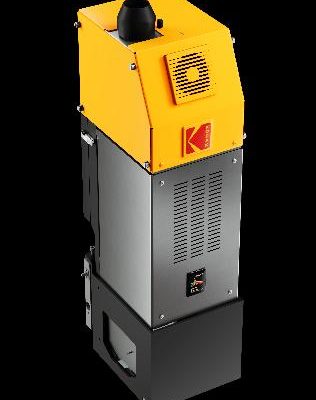
中文There is a particular kind of frustration familiar to every printer who owns a perfectly good press that simply cannot do the one thing the market now wants: variable data, serialisation, personalisation. Replacing the machine is ruinously expensive. Doing nothing means watching the work walk to a competitor. Kodak’s new Prosper Plus 5 Imprinting System is built for exactly that trap – it bolts inkjet onto the equipment you already own.
Launched this week, the Prosper Plus 5 is the latest addition to Kodak’s Prosper Plus portfolio. It is a 152-metre-per-minute system that adds Kodak’s Stream inkjet technology to existing presses and finishing lines. In plain English: instead of buying a new digital press, you upgrade the one you have with an imprinting unit that can print variable content at speed. For direct mail, packaging, security printing, lottery and personal care applications, that is a genuinely different maths.
Kodak says the system is designed for printers and converters who need variable data printing, coding, serialisation, personalisation and versioning – without the need to replace current equipment. That last clause is the whole pitch. The value of a press is not just what it prints today, but whether it can be made to print what customers will demand tomorrow. The Prosper Plus 5 is Kodak’s argument that the answer is “upgrade”, not “replace”.
The technical headline is resolution and reliability. At 600 by 900 dots per inch, flexible drop size options and enhanced reliability, the system is aimed at applications where image quality and speed both matter – and where a jam or a misprint is expensive. Kodak uses its Ektacolor inks, which it says combine image quality, speed and operational simplicity with the latest platform enhancements. For security printing and lottery work, where every code has to be legible and every label accounted for, that reliability is the selling point, not a footnote.
There is a housekeeping detail that matters more than it sounds. Kodak is simplifying its existing portfolio by renaming the Prosper Plus 1/1W and Prosper Plus 2/2W to Prosper Plus 10 and Prosper Plus 20, reflecting their production speeds of 305m/min and 609m/min respectively. Renaming a product line is usually cosmetic, but here it does something useful: it makes the speed tier obvious at a glance. A buyer can read the number and know the metres per minute. In a market where spec sheets are a maze, that clarity is a quiet competitive advantage.
Laura Cole, Kodak’s vice president of pricing and product management, framed the launch as a continuation of the company’s commitment to print. “This new addition to the Prosper portfolio reflects our continued investment and ongoing commitment to the print industry,” she said. The more substantive promise followed: “With the Prosper Plus 5, Kodak is helping printers modernise existing production assets, unlock new revenue opportunities and deliver the personalisation, traceability, and flexibility that today’s markets demand.” That is the real value proposition – not a new box, but new revenue from boxes you already own.
The strategic context is the part worth dwelling on. The print industry is sitting on a vast installed base of perfectly serviceable presses that were never designed for a world of personalised packs, traceable pharmaceuticals and serialised everything. Retrofitting inkjet onto that base is far cheaper than replacing it, and it extends the economic life of equipment that would otherwise be scrapped. Kodak is positioning itself as the company that helps printers get more from what they have rather than buy more of what they don’t need.
For converters, the practical question is whether an imprinting add-on integrates cleanly with the specific press they run. Kodak says the system adds to “existing presses and finishing lines”, which implies broad compatibility, but the proof will be in the installation. The converters who benefit most are the ones with high-volume lines that already handle variable-content jobs and need to add inkjet without halting production.
The availability is immediate and worldwide, which removes the usual wait that surrounds a launch. For a printer weighing the personalisation opportunity, that means the decision can be made and executed without a long lead time.
The bigger signal is about where Kodak sees its future. Rather than fighting only at the high end of digital print, it is building a bridge for the analogue installed base to cross into variable data. That is a huge addressable market – and a smart way to stay relevant as personalisation stops being a luxury and starts being a requirement.
For every printer staring at a capable-but-inflexible press, the Prosper Plus 5 is a reminder that the future does not always require a new machine – sometimes it just requires a smarter one.
Source: Printweek