 中文
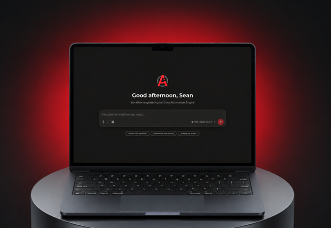
中文HP has launched a new integrated AI production solution centered on the HP Latex R530 AI Printer, a compact, all-in-one rigid-and-flexible large-format printer powered by both cloud and edge intelligence. Paired with new AI capabilities in the HP PrintOS Production Hub, the offering is designed to extend intelligence across the entire production journey, from order intake to final output, helping print service providers simplify operations and reduce errors.
At the software layer, HP PrintOS Production Hub, its integrated large-format tool for order management, job submission and remote print control, gains two headline AI features. AI Order Intake turns a customer email or file into an order in seconds using natural-language AI, which HP says reduces average order creation time by 90 percent, from a couple of minutes to just a few seconds. AI Upscale fixes low-resolution files in one click, cutting back-and-forth with customers and avoiding delays. Both features are printer-brand agnostic, so any Production Hub user benefits regardless of hardware.
On the shop floor, the HP Latex R530 AI Printer brings that intelligence from cloud to printer. AI Automatic Print Mode Selection chooses the optimal trade-off between quality and throughput, reducing operator guesswork, while more powerful onboard hardware speeds rendering and expands storage. For jobs needing no further processing, Direct Job Submission sends work straight from PrintOS Production Hub to print, connecting once-separate stages and reducing manual intervention across the workflow.
The strategic significance is larger than a single device. By wrapping reliable Latex hardware in cloud AI, HP is addressing the perennial wide-format pain points: manual order entry, file-prep churn, and operator dependency. A shop that can convert a customer email into a print-ready order in seconds, then auto-select the right print mode, removes friction at both ends of the job.
For print service providers squeezed by margin pressure and labor gaps, those efficiency gains translate directly to capacity. Less time spent on administration and file fixes means more billable production. And because the AI tools are brand agnostic, HP is positioning PrintOS as a neutral productivity layer rather than a lock-in tactic, a smart move in a multi-vendor market.
Latex technology itself continues to win share in environments where odor, cure temperature and environmental compliance matter, such as indoor signage, retail and education. Pairing it with AI lowers the skill barrier further, letting smaller shops compete on turnaround and consistency.
HP’s approach also reflects a broader industry shift toward servitized, software-defined printing. The differentiator is no longer just dots per inch or square meters per hour, but how intelligently the machine fits into the customer’s business. Cloud dashboards, natural-language order capture and automated mode selection are becoming the new battleground.
There are caveats. AI Order Intake’s accuracy depends on the quality of incoming emails and files, and shops will need to validate outputs during a learning period. But the directional bet is sound: as labor tightens, software that absorbs routine cognitive work becomes indispensable.
If HP’s 90 percent order-creation claim holds in real shops, it could reset expectations for what wide-format workflow should deliver. The Latex R530 AI Printer and PrintOS AI capabilities together mark a meaningful step toward the self-driving print room, where intelligence spans cloud and edge to keep lines moving with minimal manual touch.
Source: Print21 (https://print21.com.au/hp-launches-ai-for-wide-format/)
The brand-agnostic nature of HP’s AI tools is worth scrutinizing. By making AI Order Intake and AI Upscale available to any PrintOS Production Hub user regardless of printer brand, HP is cultivating a software ecosystem that can thrive even where its hardware is not present. That is a calculated play to make PrintOS the default operating layer for wide-format shops, a position with long-term stickiness.
For the competitive field, the implication is pressure. Other wide-format OEMs have emphasized hardware speed and color; HP is reframing the conversation around workflow intelligence and labor savings. If customers begin to evaluate purchases on order-creation time and autonomous mode selection, rivals will be forced to respond with their own software stacks.
The real test will be field performance. AI that misreads a complex email or over-upscales a critical file could erode trust quickly. HP’s 90 percent claim is a bold benchmark, but adoption will hinge on consistent, transparent results during the learning curve that every AI deployment traverses.
HP is not alone in pursuing workflow AI, but its decision to make the tools brand-agnostic is a differentiator that could widen PrintOS’s reach well beyond HP hardware installed base. If the strategy succeeds, PrintOS becomes the connective tissue of the wide-format shop, with HP printers as the natural but not exclusive beneficiaries.
The launch also reinforces HP’s positioning as a software-and-services company that happens to build printers, rather than the reverse. In a maturing hardware market, that identity is increasingly where durable margin and customer lock-in reside, and AI is the lever to get there.