 中文
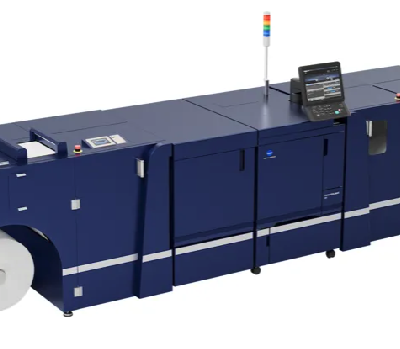
中文There is a quiet kind of confidence you only get from a business that has been through the wringer and come out the other side still standing. Baker Labels has that confidence in spades this week, and you can measure it in very concrete terms: a brand-new 510mm-wide Durst Tau G3 Peak that has more than doubled the company’s digital inkjet capacity at its Brentwood plant.
It is the first UK installation of this particular machine. That detail matters more than it sounds. When a German-Italian engineering house like Durst lets a press leave the building for the first time and land on British soil, they are not just shipping hardware. They are putting their reputation on the line with a customer they trust to show the rest of the market what the kit can actually do.
The story behind the install is the part I find genuinely moving. Baker Labels is not some faceless corporation. It was founded in 1973 by Roy and Marian Baker. Today it employs 126 people, turns over £19m, and operates out of a roughly 4,645-square-metre site spread across four units. The new press was installed on 27 August and now sits inside the company’s BakPac print room, running alongside a Tau RSC 340 LED that arrived back in October 2024.
Tom Baker, who handles finance and development, did not buy the machine on a whim. He and technical manager Jamie Godson took a trip to Durst’s headquarters in Brixen, Italy earlier this year to put the press through its paces before committing a penny. That is the kind of due diligence you would expect from a firm that respects its own money enough to test before it invests — and it tells you everything about how this deal was done.
And the quote Tom gave says more about the strategy than any press release could. “There has been a lot of investment and growth across Bakers over recent years, but labels remain right at the heart of the business,” he said. Labels. Not the flashy side projects, not the diversifications — the core. In an industry where everyone is tempted to chase the next shiny object, there is something reassuring about a company that looks at its oldest product line and says, “this is where we double down.”
The new machine runs at up to 79 metres per minute across all colours. Baker’s specific configuration includes double white, Hawk AI, Material Edge Protection and the Durst Imaging System. These are not just spec-sheet bullet points — they are the difference between a press that merely prints and a press that prints reliably when the job is awkward, the substrate is fussy, and the deadline is yesterday.
Jamie Godson was asked what single feature stood out, and his answer is the most honest thing you will hear from a technical manager: he could not pick just one. “The real strength is the collective package and the agility it gives us,” he said. That is the truth about modern production equipment. Nobody buys a press for one trick. They buy resilience, flexibility, and the ability to absorb whatever weird job lands on the desk at 4pm on a Friday.
For Durst, this install is a milestone too. Simon Cosh, the company’s UK and Ireland business development manager, put it plainly: the fact that Baker came back for a second machine is “a positive statement” about how successful the first one was. “Otherwise, you wouldn’t have been discussing a second press,” he said. That is the whole sales pitch wrapped in a single sentence. Endorsement from a respected name travels further than any brochure ever could.
The purchase is part of a wider £3.5m investment plan spanning label printing and finishing, with more details to come. Tom Baker was clear about the ambition: “We see a lot more growth ahead in labels. The aim is to make sure we have the people, the capacity and the technology in place to take advantage of that.”
Step back for a second. A fifty-year-old family firm, 126 employees, a £19m turnover, and they are still planting flags. They are still saying “we are not done.” In a print sector that spends a lot of time mourning its own decline, Baker Labels is a useful counterexample. The demand is there. The growth is there. The only real question is whether you have built the capacity to catch it.
If you run a print business, or you are thinking about starting one, there is a lesson buried in this story that has nothing to do with inkjet speeds. Baker did not buy the biggest, newest thing to impress people. They bought a second machine from a supplier they already trusted, to do a job they already knew they had. That is how durable businesses are built — one confidence-backed decision at a time.
For customers, the practical upshot is simple: more capacity means shorter lead times, more scheduling flexibility, and a supplier that is not going to buckle when three urgent jobs land in the same week. In a market where “can you turn it round by Friday” is the whole ballgame, that resilience is worth more than any headline speed figure.
The next time someone tells you print is a dying trade, point them at Brentwood. A family business that has survived half a century just bet three and a half million pounds on tomorrow. That is not a sunset industry. That is a company that knows exactly where the sun is rising, and has bought the machine to catch the light.
Source: Printweek