 中文
中文Koenig & Bauer and Siemens have provided an update on their strategic partnership to develop next-generation machine architectures for the printing and packaging industry. One year after announcing the collaboration, the two companies say the project is progressing according to a multi-year roadmap and is currently in an intensive, agile development phase.
From IT Concepts to Running Hardware
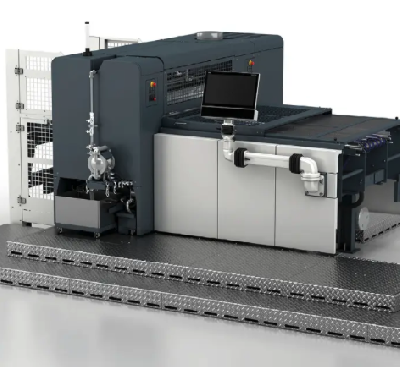
Rather than designing software architectures in isolation, engineering teams from both companies are co-developing directly on a Rapida 106 prototype press. In this iterative process, they are programming and evaluating how essential core functions can be controlled in real time. Functions under development include absolute synchrony between machine and sheet travel, automated washing programs, and precise timing in positioning systems.
This hands-on approach reflects the complexity of industrial printing equipment. A printing press is not a generic machine tool. It involves high-speed mechanical motion, precise registration, multiple printing units, drying systems, and a continuous web or sheet flow. Replacing traditional control architectures with software-defined systems requires proving that the new approach can match or exceed the speed, precision, and reliability of established designs.
Why Software-Defined Matters
The broader goal is to create future-proof information technology structures that integrate seamlessly into modern factory ecosystems. Manufacturers want equipment that can connect easily to upstream prepress systems, downstream finishing lines, and plant-level manufacturing execution systems. Software-defined architectures make that integration easier because functionality is exposed through standardized interfaces rather than buried in proprietary hardware.
At the same time, the global shortage of specialized automation experts is forcing equipment manufacturers to rethink how they engineer control systems. A software-defined approach can reduce reliance on scarce hardware specialists and make it easier to update, diagnose, and optimize machines remotely. For print shops struggling to hire and retain automation talent, this could translate into faster service and lower total cost of ownership.
Strategic Positioning
The partnership brings together two companies with deep but complementary expertise. Koenig & Bauer understands the mechanical and process requirements of high-performance printing presses. Siemens brings industrial automation, control systems, and digitalization experience at scale. The collaboration is not about a single product; it is about establishing the control foundation for future generations of printing equipment.
For the market, the announcement signals that press architecture is becoming a competitive battleground. Speed and print quality will remain important, but the ability to integrate into smart factories, update software continuously, and manage machines with fewer specialists may increasingly determine purchasing decisions.
Source: thepackman.in — “Koenig & Bauer and Siemens collaborate on next-generation software-defined machine architecture”