 中文
中文The collapse of UYR, a South Kirby-based print and marketing company that once claimed to produce around 3.5 million flyers weekly for 500 venues across the UK and Europe, has left a trail of debts exceeding £3 million and raised fresh questions about the viability of print businesses that depend heavily on the hospitality sector.
A Business Built on Bars and Nightclubs
UYR operated litho, digital, and wide-format printing equipment, offering a comprehensive range of services including design, print production, point-of-sale materials, warehousing, and distribution. At its peak, the company employed 94 staff and positioned itself as a leading supplier of marketing materials to bars, restaurants, and nightclubs — a niche that generated significant revenue before the Covid-19 pandemic fundamentally disrupted its client base.
The hospitality sector’s prolonged recovery from pandemic restrictions left UYR increasingly exposed to financial pressures that its administrators, Ben Fallon, Robert Ferne, and Jacob Beake of BTG (Begbies Traynor Group), described in detail in their Statement of Proposals. According to the administrators, UYR had been “increasingly exposed to financial pressures” and was “badly affected by the Covid-19 pandemic’s impact on its clients in the hospitality sector.”
The Financial unravelling
The company’s financial position deteriorated through a combination of factors that many print businesses will recognise, even if the specific circumstances at UYR were particularly acute. A significant bad debt arising from the insolvency of a key customer, ongoing delays in customer payments, and revenue falling below forecast all contributed to the downward spiral.
These problems were compounded by material increases in input and staffing costs that could not be sufficiently mitigated given the shortfall in anticipated revenue. By Q3 2025, UYR’s liquidity position had become critical. The company had breached the terms of its invoice discounting facility with RBS Invoice Finance, and drawdown was effectively restricted as a result.
UYR founder and director Adam Wood secured emergency funding of £347,000, but this proved insufficient to stabilise the firm’s financial position. Attempts to secure additional funding or equity investment also proved unsuccessful. Wood sought advice from BTG Advisory in March 2026, and an accelerated marketing process was launched. Teaser information was circulated to 107 potential purchasers, nine of whom signed non-disclosure agreements and received detailed information. Ultimately, however, no offers were received.
The Debt Picture
Secured creditors face significant shortfalls. Bizcap was owed £566,987, RBS Invoice Finance £761,799, and NatWest Bank £253,000 — totalling more than £1.58 million. However, the administrators expect insufficient funds to be available to repay Bizcap’s amount. UYR’s 94 former employees have a collective preferential claim for wages and holiday pay estimated at £176,352, while pension contributions owed by the company remain undetermined.
HMRC’s secondary preferential claim stands at £833,108 for unpaid PAYE and VAT. BTG has received claims totalling £1,532,742 from unsecured creditors. The administrators stated there was unlikely to be any distribution to preferential, secondary preferential, or unsecured creditors, as the net property is expected to be nil.
Asset Realisations and what Comes Next
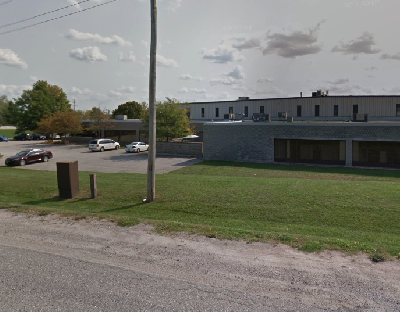
In terms of asset recovery, UYR owned the freehold of a 1,971-square-metre unit at Langthwaite Grange Industrial Estate, while the adjacent 1,197-square-metre unit was owned by Wood’s pension scheme. The two units are being marketed jointly by BTG Eddisons, with guide prices of £725,000 for unit 15 and £1.4 million for unit 17 — a combined asking price of £2.125 million.
Eddisons also conducted an auction for UYR’s unencumbered plant and machinery, including litho, digital, and post-press equipment. The auction concluded in June with proceeds yet to be confirmed. Former technical director Andy Travis acquired the company’s bespoke order processing technology platform for £10,000, while Wood purchased a small quantity of UYR stock for £1,000.
Wood has incorporated a new company, Sevenstar (Yorkshire) Ltd, registered under “printing not elsewhere classified” at Companies House on 28 May 2026. His plans for the new venture remain unknown.
Wider Industry Implications
UYR’s collapse illustrates a broader pattern in the UK print industry: businesses that built their revenue models around specific sectors — particularly hospitality and retail — have faced disproportionate challenges since 2020. The pandemic’s lasting impact on nightlife and bar culture, combined with rising input costs, staffing pressures, and tighter credit conditions, has created an environment where even well-established operations can find themselves unable to recover.
The failure to attract any buyer from a pool of 107 potential purchasers is particularly telling. It suggests that the market does not currently value UYR’s business model or asset base at a level that would support a going-concern transaction — a sobering indicator for other print companies operating in similar niches.
Source: Printweek — “UYR red ink revealed” (14 July 2026)